
The Department of Health and Social Care has responded to a parliamentary question about alcohol advertising restrictions

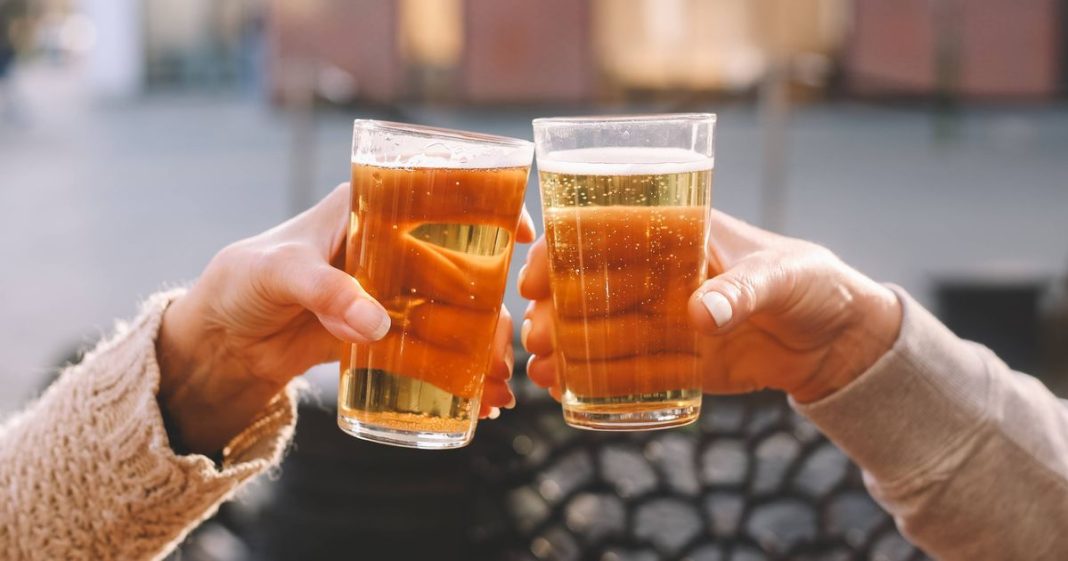
An MP raised a question about the marketing of alcoholic products (stock image)(Image: Iuliia Bondar via Getty Images)
The Department of Health and Social Care has shared a statement over ‘restrictions’ on alcohol. It relates to adverts and follows a recent parliamentary inquiry. This inquiry centres on the rules that control how alcoholic beverages are marketed and whether these should mirror those already in place for ‘less healthy food and drink’.
Since January 2026, advertisements for less healthy food and beverages have been banned on television before 9pm and across online platforms entirely. The UK Government believes this measure could eliminate up to 7.2 billion calories from children’s diets annually, whilst cutting the number of young people battling obesity by 20,000.
Against this backdrop, Danny Beales, Labour MP for Uxbridge and South Ruislip, questioned the Government earlier this month about whether it would conduct ‘an assessment of the potential merits of introducing restrictions on alcohol in line with existing restrictions on the marketing of less healthy food and drink’.
Now Ashley Dalton, Parliamentary Under-Secretary for the Department of Health and Social Care, has responded and set out that existing alcohol adverts adhere to ‘voluntary codes’. “Currently, alcohol advertisements follow voluntary codes, regulated by the Advertising Standards Authority (ASA),” she said.
“The ASA’s Advertising Codes contain specific rules about how alcohol can be advertised, as they recognise the social imperative of ensuring that alcohol advertising is responsible.
“The Department of Health and Social Care will continue to work with the Department for Digital, Culture, Media and Sport, as the lead Government department responsible for advertising, to consider if additional statutory restrictions on marketing and advertising are needed to reduce alcohol related harms.”
Mr Beales’ question emerges at a time when approximately 15,000 people die annually across the UK from alcohol and drugs. Hundreds of thousands more suffer the enduring consequences, with England facing an estimated £47 billion in annual costs.
This week, the Department of Health and Social Care also revealed it would be exploring wearable technology, artificial intelligence and even virtual reality schemes as part of a drive to combat drug and alcohol dependency nationwide. Government backing of £20 million in grants is now available to help create these innovations alongside groundbreaking treatments over the next few years.
The application process launched on February 16, providing grants worth up to £10 million for advanced, high-impact initiatives capable of demonstrating real-world efficacy.
Science Minister Lord Patrick Vallance said: “Cutting-edge medicines and technologies could save thousands of lives lost to alcohol and drug addiction while improving outcomes for hundreds of thousands more. Backing both late‑stage technologies and earlier‑stage innovations means we are creating a clear and rapid route from breakthrough ideas to real‑world impact.
“This is about using the UK’s scientific excellence to prevent avoidable deaths and support recovery, while helping innovative companies to grow and thrive in the UK at the same time.”
What constitutes alcohol misuse?
Alcohol misuse describes drinking in a manner that proves damaging or when someone becomes reliant on alcohol. Apart from immediate consequences like hangovers, headaches and dehydration, this behaviour can elevate the likelihood of countless severe health complications.
These encompass raised blood pressure, pancreatitis, liver disease, dementia and multiple forms of cancer, amongst various other ailments. Consequently, consuming no more than four ‘units’ of alcohol weekly, distributed across three or more days, is recommended. That equates to six medium (175ml) glasses of wine, or six pints of 4% beer.
Further alcohol advice can be found at the NHS website here.
#Government #issues #update #calls #alcohol #restrictions