
An NHS doctor has explained how babies can get early MMR vaccination during measles outbreaks

A doctor has provided some measles vaccine advice amid an outbreak(Image: Getty)
An NHS medic has revealed a lesser-known six-month measles guideline that could help safeguard your youngster. The specialist explains that it’s possible to have your infant immunised early.
But this only applies under particular conditions. Measles is an extremely infectious disease that can result in serious complications for certain people.
Young children face especially high risks. Earlier this month, health officials confirmed a rapidly expanding outbreak throughout multiple North London schools, predominantly affecting unvaccinated children under 10 years of age.
The NHS cautions on its website that measles can cause severe complications if it spreads to other parts of the body, particularly the lungs or brain. Serious potential complications include pneumonia, meningitis, sight loss, and fits.
Immunisation remains the most effective method to guard against measles. Also referred to as the MMR or MMRV jab, it’s normally administered to youngsters at 12 months and 18 months of age.
However, there are situations where your child might receive their vaccination sooner. In a clip posted to social media platform TikTok, Doctor Suraj Kukadia provided further details.
Dr Kukadia, who goes by Dr Sooj online, explained: “The first MMR or MMRV vaccine is given on your child’s first birthday. This is on their first birthday or very, very soon after their first birthday.
“MMR stands for ‘mumps, measles and rubella’ and MMRV is for mumps, measles, rubella and varicella, which is the new version of MMR vaccine.
“The vaccination for varicella helps to protect against chickenpox. ” He went on: “But did you know that babies aged between six months and 11 months can have an early dose of the MMR or MMRV vaccine?”
He outlined the particular situations where this is relevant. Dr Sooj stated: “But this is only the case if they are travelling to an area where there is a higher risk of catching measles or they’ve been in contact with someone who has measles, or there’s an outbreak of measles, which there is at the moment.
“Now, if you do decide to give your child an MMR or mmrv vaccine early, then they will still need two doses of the vaccine after they turn one and this is how we help to confirm longer term protection.”
He also cautioned that you might struggle to obtain this early jab via the NHS. “You can speak to your GP about this, but there is a chance you’ll have to go privately for it because that additional vaccine dose will be outside of the routine immunisation schedule.”
The NHS website confirms that the vaccine can be given early. It says: “Babies aged six to 11 months can have an early dose of the MMR or MMRV vaccine if:
- They’re travelling abroad to an area where there’s a higher risk of catching measles
- They’ve been in close contact with someone who has measles
- There’s an outbreak of measles
“Speak to your GP if you think your baby might need an early dose of the MMRV or MMR vaccine.”
Measles outbreak
The latest figures from the UK Health Security Agency (UKHSA) show there have been 130 laboratory-confirmed measles cases reported in England since 1st January this year. In 2025, there were 959 cases documented, and in 2024, there were 2,911 – the highest annual total since 2012.
Between 2019 and 2025, there were 20 deaths linked to measles, equalling the number recorded during the 19-year span from 1999 to 2018.
From 2021 to 2023, the UK was deemed to have successfully “eliminated” measles. The resurgence of infections has been attributed to a substantial decline in vaccination rates.
In January, the UKHSA stated: “Uptake of the routine childhood vaccinations is the lowest it has been in a decade and is well below the 95 per cent uptake needed to protect the population and prevent measles outbreaks. This is giving measles a chance to get a foothold in our communities.”
Signs of measles
The NHS says that measles usually starts with cold-like symptoms, followed by a rash a few days later. Some people may also get small spots in their mouth.
The first symptoms of measles include:
- A high temperature
- A runny or blocked nose
- Sneezing
- A cough
- Red, sore, watery eyes
Characteristics of a measles rash:
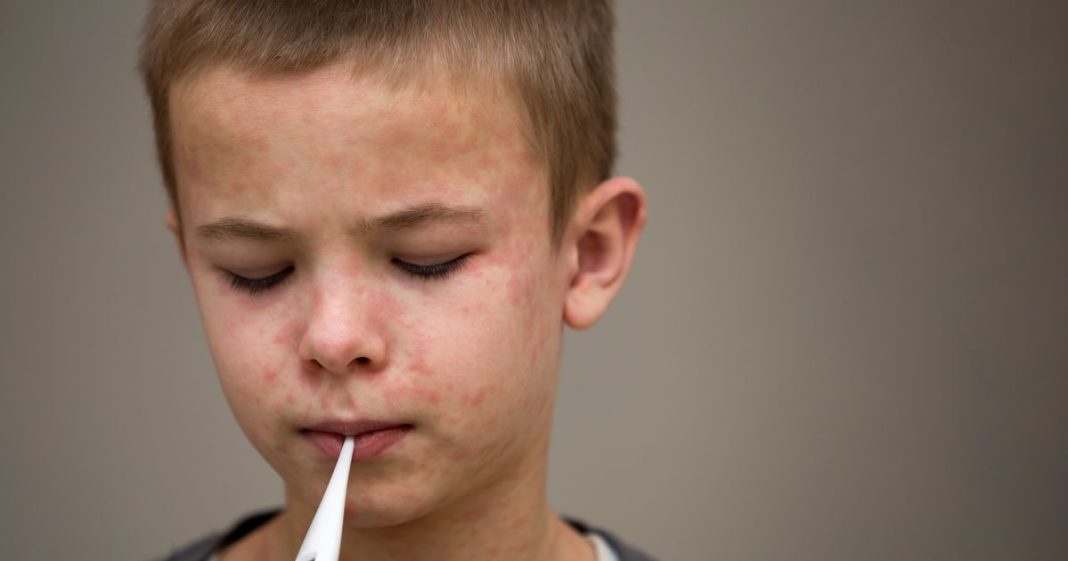
- The rash starts on the face and behind the ears before spreading to the rest of the body
- The spots of the measles rash are sometimes raised and join together to form blotchy patches. They’re not usually itchy
- The rash looks brown or red on white skin. It may be harder to see on brown and black skin
You should ask for an urgent GP appointment or get help from NHS 111 if you think you or your child may have measles. The NHS says: “Measles can spread to others easily. Call your GP surgery before you go in.
“They may suggest talking over the phone or arrange for you to come to a part of the surgery where you’re separated from others.”
How to prevent the spread
Measles is transmitted when an infected person breathes, coughs, or sneezes. The infectious period begins when symptoms first appear (approximately four days before the rash emerges) and continues until four days after the rash has developed.
To limit the spread of the infection, the NHS recommends staying away from school or work for at least four days after the onset of the rash.
Guidance on its website states: “Stay off nursery, school or work for at least four days from when the rash first appears. Also try to avoid close contact with babies and anyone who is pregnant or has a weakened immune system.”
Additional preventative measures recommended by the NHS include:
- Opening windows and doors to help reduce the risk of measles spreading – only open the top window or use safety catches if you have young children
- Frequent hand washing with soap and warm water
- Using tissues when coughing or sneezing and disposing of them immediately
- Avoiding sharing cutlery, cups, towels, clothes, or bedding
#NHS #doctor #shares #6month #measles #vaccine #rule #outbreak