
The Strait of Hormuz, and its inability to stay open or closed for any amount of time, has dominated headlines for weeks, but why is it so hard to keep a lid on one of the world’s most important waterways

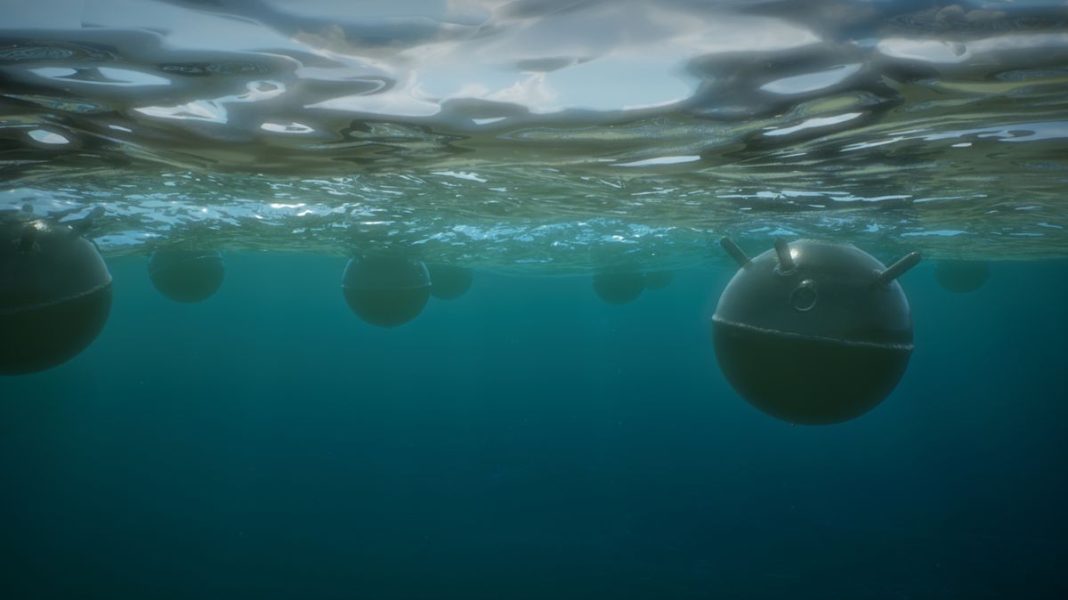
Mines like these are just one of many reasons that sailing through the Strait is more difficult than it sounds(Image: Getty Images)
Unless you are a big fan of the global oil trade, the Iranian coastline, or maybe you had used ‘Hormuz’ as a hail Mary move in a tight game of Scrabble, you would be forgiven for never having given a moment’s thought to the narrow waterway that connects the Persian Gulf to the open ocean.
But, following Donald Trump and Benjamin Netanyahu deciding that now is as good a time as ever to point their very well-stocked arsenals of missiles and drones in the direction of Iran and press fire, the Strait of Hormuz has become something of a household name.
More specifically, the world is waking up to the fact that, if they so wish, the Ayatollahs in charge of Iran can do a Gandalf and ‘you shall not pass!’ the Strait at what appears to be a moment’s notice, and in doing so cause worldwide mayhem that impacts not only the price of your petrol, but your fish and chips too.
But, especially given the constant brags from Trump and his various lackies that Iran’s military and navy have been ‘obliterated’, how are they still able to shut the Strait of Hormuz at a moment’s notice, and why can’t anyone seem to do anything to stop them?
What’s more, given that the keys to global economic security seem to be in Iran’s hands, how likely is it that the Strait will remain open for any considerable time, and what will we have to do to make sure Iran play ball?
Mine control
On paper, the difference in size and strength between Iran and the US would suggest that keeping their mitts off the vital Strait of Hormuz would be a pretty straight forward task. As Trump has discovered to his obvious displeasure, this is not the case. And the reason why is pretty simple.
Essentially, the Strait of Hormuz is very narrow, and oil tankers that sail through it are extremely big and extremely slow. At its narrowest, the waterway is just 21 miles wide, which means Iranian strikes (most of which are designed to travel 100s of miles at high speeds) from the coast can hit their targets way before they can be intercepted by even the most high-tech US defence systems.
To make matters worse, the risks don’t just come from the coast. Reports indicate that the Iranian navy has the capability to place a maze of powerful sea-mines across the Strait, which if triggered have the power to sink even the largest of tankers, along with millions of dollars in cargo.
While it is possible to detect and defuse these mines, as well as pre-emptively strike missile launch sites that pose a risk to ships sailing through the Strait, nearly everyone agrees that the risk of something going under the radar is far too high.
Even if only a fraction of the vessels passing through are attacked by Iran, that would still result in the loss of billions of dollars and potentially the lives of those on board.
Give it to me Strait
Considering naval protection in the Strait of Hormuz itself is seemingly off the cards, world leaders have been grappling with how exactly to twist Iran’s arm into opening the vital passage once again.
Trump’s strategy has been pretty simple: drop a bomb, assassinate a Iranian official or two, drop another bomb, threaten to kill a ‘whole civilisation’, drop some more bombs, and so on.
In other words, the US have sought to put Iran under constant, nation-wide military pressure to the extent that they have to open the Strait or else face a wipe out.
Or as Donald Trump himself put it: “Open the F*****’ Strait, you crazy b*******s, or you’ll be living in Hell – JUST WATCH!”
Closer to home, the UK Government has also been urging Iran to open the Strait, albeit in a slightly less sweary fashion.
A spokesperson for the Government stated that the Britain was working hard “to convene partners to agree and plan the practical steps required to give shipping the confidence to transit the Strait”.
Toll be or not toll be
One possibility, at least in Iran’s eyes, is that ships sailing through the Strait pay a fee in order to not be blown to smithereens.
The controversial Hormuz toll would, according to reports, see those sailing tankers through the passage made to cough up around a dollar a barrel, which doesn’t sound a lot until you hear that a single ship can carry up to 3 million barrels per trip.
Other reports have claimed that Iran may instead try and extract cryptocurrency from those looking to pass through, with the Daily Mail claiming a figure of $1 million worth of crypto per journey.
To put that into perspective, if that fee was paid by every cargo ship that passed through the Strait last year, Iran could receive in excess of $50 billion.
Unsurprisingly, world leaders have distanced themselves from the possibility of a toll being set up, with UK Foreign Secretary Yvette Cooper describing it as “crucial” that no such system was set up.
She stated: “It is crucial that Iran is not allowed to impose tolls on the Strait of Hormuz”, adding that “This is an international transit route through the high seas, so it cannot be allowed to apply tolls and restrictions to that route as it reopens.”
She also said she had spoken with other world leaders who have been “very clear about the damage that tolls would do with international shipping”, and said they had said the idea was a “hard no”..
#pass #reasons #cross #Strait #Hormuz #ceasefire